Swiss Roll Cake Machine
Consistent Rolling and Filling for Commercial Swiss Roll Production
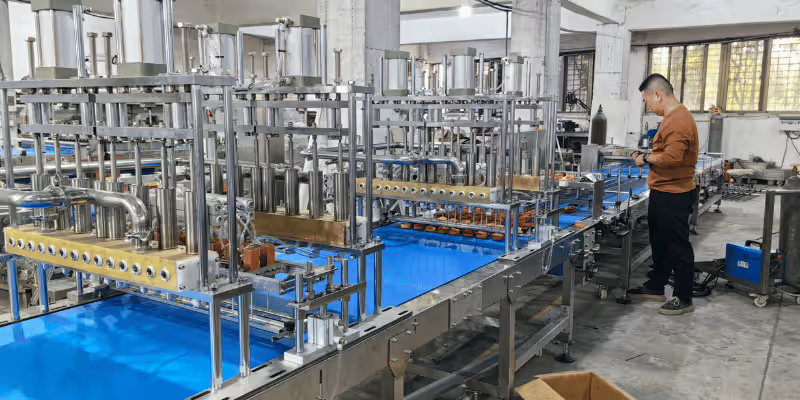
A Swiss roll cake machine automates sponge cake rolling and, in some configurations, cream spreading and filling for Swiss rolls, roulades, and other filled cake roll products. Designed for commercial production, these machines help bakeries improve roll-shape consistency, reduce manual handling, and deliver more repeatable output across different production volumes.
Yucho Bakery Equipment offers two machine types to match different workflow needs: a semi-automatic machine for rolling-only operations, and a fully automatic machine that combines cream spreading and rolling in one system. Whether you’re producing in smaller batches or running a higher-volume production line, our team can help you choose the right configuration for your product range and output targets.
Home » Cake Manufacturing Equipment » Swiss Roll Cake Machine
A Trusted Manufacturer of Bakery Processing Equipment
Yucho Bakery Equipment designs and manufactures cake processing machinery for bakeries, dessert workshops, and food factories worldwide. With over 35 years of manufacturing experience and customers in 65+ countries, we build equipment that delivers dependable production output, from small workshops to growing commercial operations.
Send Us Your Requirements
Tell us your product type, target capacity, and layout needs — our team will respond within 6 hours.
What Is a Swiss Roll Cake Machine?
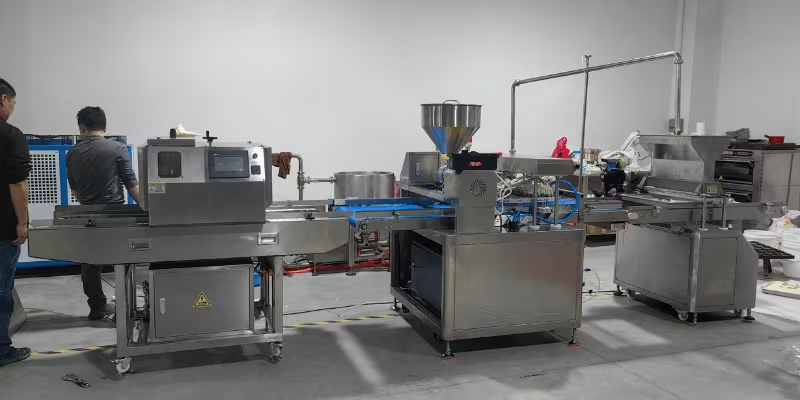
A Swiss roll cake machine is industrial equipment that forms baked sponge sheets into rolled cake products with more consistent shape, tightness, and appearance. Depending on the configuration, the machine may handle only the rolling step or combine filling and rolling in a single automated process.
There are two main types of Swiss roll cake machines:
Rolling-only machines (semi-automatic):
The operator manually feeds the prepared sponge sheet, and the machine automates the rolling step.
Coating-and-rolling machines (fully automatic):
The machine spreads cream or other fillings across the sponge sheet and rolls it in one continuous automated process.
Both types reduce product variation from manual rolling and support more uniform cake roll production in commercial bakery environments.
Why Use a Swiss Roll Cake Machine in Commercial Production?
Consistent Product Quality
Controlled rolling action helps create more uniform roll shape and tightness across repeated runs, reducing visible variation in the finished product.
Lower Labor Dependence
Automating the rolling step — and, in fully automatic configurations, the cream spreading as well — reduces manual handling and helps standardize production across operators.
More Stable Output
Standardized mechanical processing supports repeatable results, whether you're producing a few hundred pieces per hour or running larger production volumes.
Better Scalability
With both semi-automatic and automatic configurations available, bakeries can move from smaller-batch production to more integrated, higher-output workflows as demand grows.
Choose Your Swiss Roll Machine
Semi-Automatic Swiss Roll Machine (YCR-401)
Designed for bakeries that apply filling separately before rolling, this model combines manual sponge sheet feeding with automatic rolling. It is a practical choice for small- to medium-batch production where flexibility, simpler operation, and lower equipment investment are priorities.
Automatic Swiss Roll Making Machine (YCR-402)
Designed for higher-volume production, this model integrates cream spreading and rolling in one automated system. It is well suited to bakeries that want more consistent filling application, lower labor dependence, and smoother output across long production runs.
Semi-Automatic vs. Automatic: Which One Fits Your Production?
| Consideration | Semi-Automatic (YCR-401) | Automatic (YCR-402) |
|---|---|---|
| Filling application | Manual, applied before loading | Automatic, built into the machine |
| Rolling process | Automatic | Automatic |
| Capacity | 300–400 pcs/hr | 300–450 pcs/hr |
| Best suited for | Small to medium batches, lower equipment cost | Higher-volume, continuous production across shifts |
| Labor dependence | Lower than fully manual rolling, but still requires manual feeding | Lower overall, with filling and rolling both automated |
| Equipment footprint | Compact (1220 × 1360 × 1060 mm) | Larger (3780 × 1130 × 1400 mm) |
If your production involves applying filling separately and you're looking for a lower-cost entry point, the semi-automatic machine is typically the better fit. If you need to automate both cream spreading and rolling for higher-volume, multi-shift production, the automatic machine is designed for that scale.
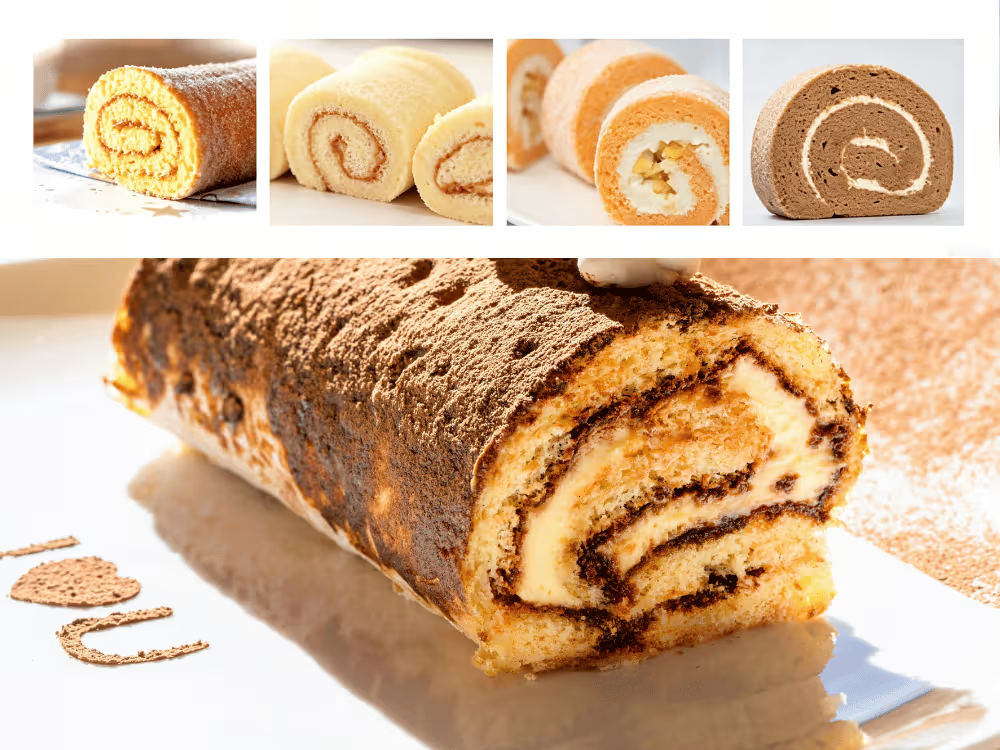
Products Commonly Made with Swiss Roll Machines
These machines are used for a variety of sponge-based rolled cake products in commercial bakery production, including:
- Swiss rolls
- Roulades
- Tiger skin cake rolls
- Fruit cream rolls
- Sponge roll cakes
- Sandwich cake rolls
- Filled layer rolls
Key Applications and Production Environments
Swiss roll cake machines are used across a range of commercial and industrial production environments, including:
- Commercial bakeries
- Dessert factories
- Central kitchens
- Frozen dessert production lines
- High-output bakery workshops
The most suitable machine type depends on production scale, labor arrangement, and filling method. Semi-automatic models are often preferred in smaller-batch operations where filling is applied separately, while automatic coating-and-rolling systems are better suited to higher-volume facilities that need more integrated production.
Line Integration and Production Flexibility
Both machine types can operate as standalone units or be integrated into a broader Swiss roll production line. Depending on your setup, they can connect with upstream baking and cooling equipment as well as downstream slicing, cutting, or packaging systems.
This gives bakeries the flexibility to introduce Swiss roll automation into an existing workflow or include the machine as part of a more complete production line as capacity needs grow.
Why Choose Yucho Bakery Equipment
35+ years of manufacturing experience with bakery processing equipment supplied to customers in more than 65 countries.
Direct manufacturer support, not a trading intermediary, giving customers direct access to engineering and production teams.
In-house design, production, and assembly, helping maintain build consistency and support project coordination.
Full machine testing before shipment to confirm performance before delivery.
Fast technical response, with tailored solution proposals typically provided within 3 days.
Export and shipment support for international bakery equipment projects.
Our Certifications
Yucho’s food processing equipment meets international food safety and machinery standards expected by commercial bakery operations. Certification documentation is available on request for buyers evaluating equipment for regulated markets.
Our Manufacturing Strength
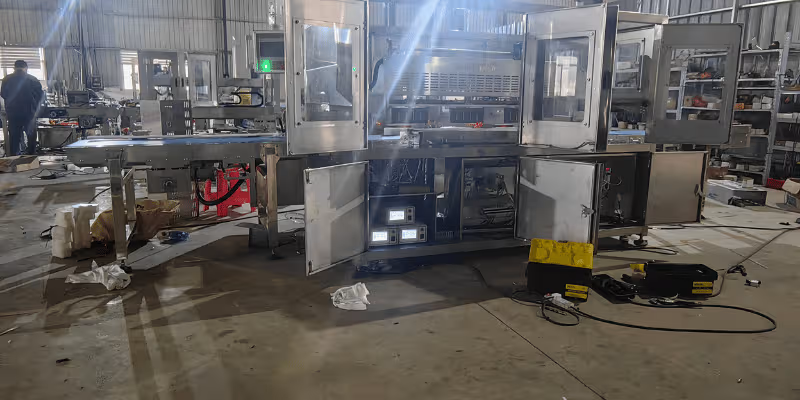
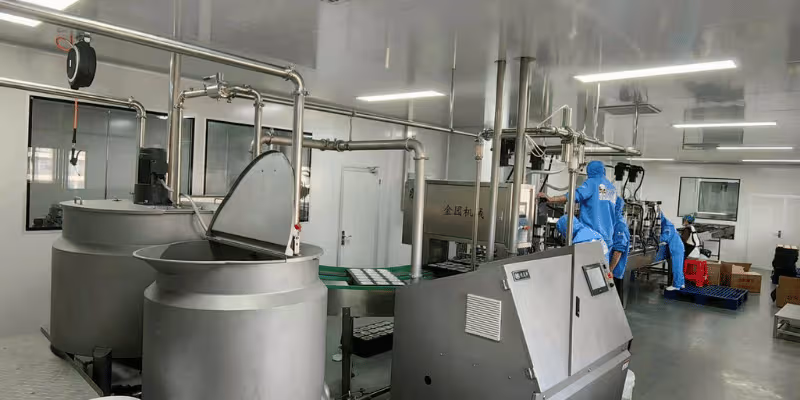
With more than 35 years of bakery equipment manufacturing experience, Yucho builds each egg wash spraying machine in-house and supports customers with stable machine quality, tested performance, and practical engineering coordination for export projects.
Our Manufacturing Strength
With more than 35 years of bakery equipment manufacturing experience, Yucho builds each egg wash spraying machine in-house and supports customers with stable machine quality, tested performance, and practical engineering coordination for export projects.
FAQs
What's the difference between the semi-automatic and automatic Swiss roll machines?
The semi-automatic machine (YCR-401) automates the rolling step only, with filling applied separately before the sponge sheet is fed into the machine. The automatic machine (YCR-402) combines cream spreading and rolling in one automated process, making it better suited to higher-volume production.
Which machine should I choose for cream-filled Swiss rolls?
Both machines can be used for cream-filled products, as well as jam, fruit puree, and chocolate-based fillings. If you need the filling to be applied automatically as part of the process, the YCR-402 is the better choice. If filling is applied separately before rolling, the YCR-401 is typically sufficient.
Can these machines be integrated into an existing production line?
Yes. Both machine types can run as standalone units or be configured to connect with upstream baking and cooling equipment and downstream slicing, cutting, or packaging systems.
How do I know which capacity is right for my production needs?
The YCR-401 produces approximately 300–400 pieces per hour, while the YCR-402 produces approximately 300–450 pieces per hour. Actual output depends on product size, filling type, and operating conditions. Our team can review your production targets and recommend the most suitable configuration.
What information should I provide to get an accurate quotation?
To prepare a more accurate proposal, please share your target roll size, desired output, filling type, available facility space, and any plans for integration with existing equipment.
Do you offer customization for either machine?
Yes. Both machines can be customized to match roll size requirements, filling characteristics, power supply standards, and production workflow needs.
Are these machines easy to operate?
Yes. Both machine types are designed for straightforward operation, and most operators can learn the workflow without specialized pastry production experience.
Request a Quote or Custom Layout Proposal
Whether you need a cost-effective rolling solution or a fully integrated coating-and-rolling system, our team can match the right configuration to your output targets and facility layout.